What does gasoline mean, origin of the word? Why is it called gas when it is a liquid? Difference between petroleum and gas?
These questions sort of keep popping up and I never really understood the why?
I went scratching around and found an article at Oxford Dictionaries that has changed my understanding of the words gas and gasoline.
The article you can find at Oxford Dictionaries
Read and learn, it’s not what I expected, and contrary to the universally accepted norm that it originated in the USA/Canada during the late 1850’s.
If one looks at the dateline the word gasoline originated in Britain
But, is this the final word, so to speak?
Monday, 16 April 2012


Tuesday, 13 March 2012

Thursday, 17 November 2011
Point of no return

Parachutist just after leaving the aircraft, Robertson Skydive, Robertson
Overcast, dark and had just started raining slightly.
Nikon D200, Sigma 150-500mm lens
Click image to enlarge
Shutter priority 1/1000
Image at flickr

Wednesday, 16 November 2011

Tuesday, 15 November 2011
Bredasdorp Shipwreck Museum
Bredasdorp Shipwreck Museum. Situated in Bredasdorp CBD, easily accesible, and parking was no problem. R20,00 per person entry fee, If I can remember correctly.
Staff were friendly and helpful. Photographs were permitted, but the request was made by staff not to take images of any of the maps.
Depending on your level of interest,


one could spend between 30 minutes to maybe an hour and a half in and around the museum.
The museum has an interesting history, which I am not going to repeat here. Village Life is a good place to start if you want greater background and stuff to see.
Posters and maps are available for sale, but somehow I missed this, and need to go back for a specific map with the locations of the various shipwrecks. This specific map is to be seen in virtually every home in and around Agulhas, but can only be purchased at the Museum for about R150,00, I was told. A framed map is available from other sources for about R2,000-00.
Open daily
Update: Framed copy of map "begrafplaas van Skepe" available @ R2,300-00
Staff were friendly and helpful. Photographs were permitted, but the request was made by staff not to take images of any of the maps.
Depending on your level of interest,


one could spend between 30 minutes to maybe an hour and a half in and around the museum.
The museum has an interesting history, which I am not going to repeat here. Village Life is a good place to start if you want greater background and stuff to see.
Posters and maps are available for sale, but somehow I missed this, and need to go back for a specific map with the locations of the various shipwrecks. This specific map is to be seen in virtually every home in and around Agulhas, but can only be purchased at the Museum for about R150,00, I was told. A framed map is available from other sources for about R2,000-00.
Open daily
Update: Framed copy of map "begrafplaas van Skepe" available @ R2,300-00
Weather vane, Dutch Reformed Church, Robertson
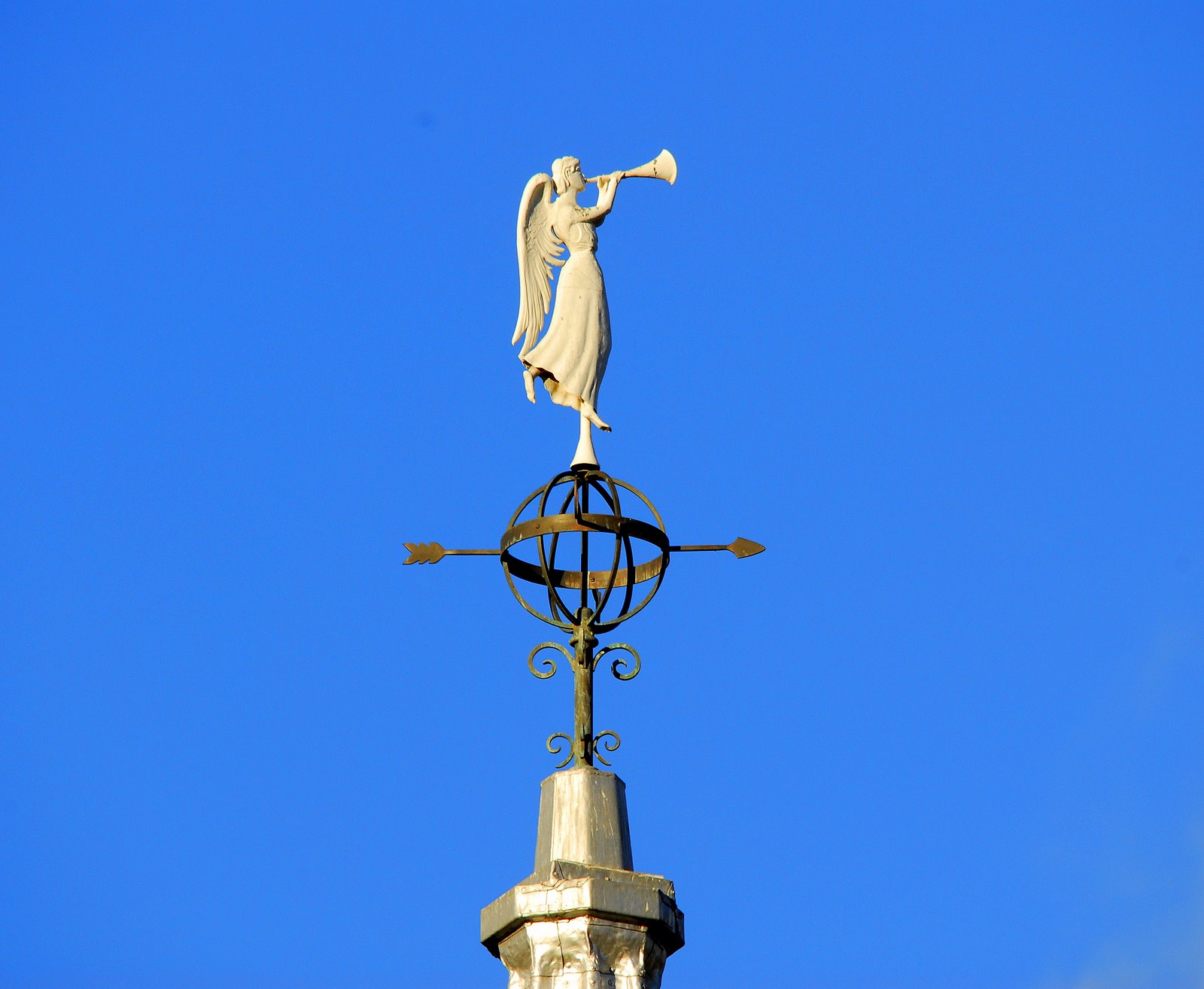
Image taken early morning with a Nikon D200 and Sigma 150-500mm lens.
Click image to enlarge
Monday, 14 November 2011
Gewone Bontrokkie, African stonechat, Saxicola torquata

Gewone Bontrokkie, African Stonechat - Saxicola torquata
Image taken with a Nikon D200 and Sigma 150-500mm lens
Click on image to enlarge
Thursday, 13 October 2011
Cape Weaver with Lunch (Ploceus capensis)

This is one of those "it happened" images. Was busy concentrating on aircraft flying overhead and the Weaver arrived. Many days I have waited in the same position to get a good image of a weaver and the nest, without much success. Subject usually facing the other way, sun from unwanted angle, factory wall in the background, no eye contact, underexposed, overexposed etc etc. Only had time to do a 3 frame burst on the fly with aircraft settings on the camera before she dissapeared. The bonus part was that I never saw the insect until the image was uploaded. Still getting to terms with the 18-200mm Nikor zoom. What I am beginning to appreciate is that many "keepers" just "happen", and theory considerations regarding planning, tripods, depth of field , focus and rule of thirds dissapear from one's mind when you have maybe two seconds to take the shot.
The distrust of the intruder into her domain is visible in her eye
I am by no means a bird expert, sometimes I get the identification all screwed up.
http://wildcliff.org/fauna/birds/ploceus_capensis.html , for detailed information
Tuesday, 04 October 2011
Image of a Chameleon

This image was take with a Nikon D200 and an 55-200mm Nikor Nikon lens from a D3100 bundle.
Dark, rainy and cloudy day
f5,6
55mm
1/30
ISO 160 (Maybe I should have juiced the ISO up a
bit)
Wednesday, 28 September 2011

Sunday, 18 September 2011

Wednesday, 24 August 2011
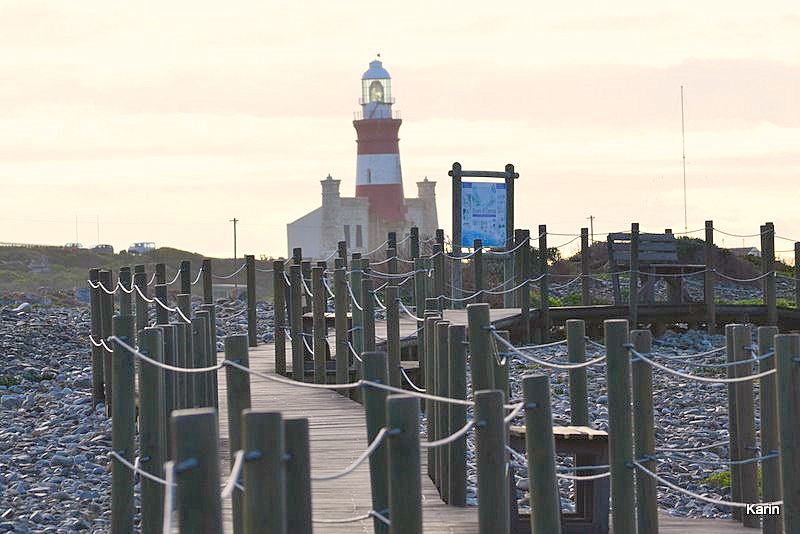
Cape Agulhas Lighthouse
Cape Aghulhas Lighthouse from a different perspective.
 Nikon D3100
Source: Karin
Source: Karin
Sunrise at Cape Agulhas National Park
Sunrise at Cape Agulhas National Park.
Image taken just before sunrise.
 Nikon D200Exposure time 1/160
70mm
f6.3
ISO 100
Double click on imgage to enlarge
Image taken just before sunrise.

70mm
f6.3
ISO 100
Double click on imgage to enlarge
Thursday, 11 August 2011
What type of spider is this?
Anyone know anything about this spider?
 Dissapearing spider
This image was taken at the Cape Agulhas National Park a few weeks ago.(Nikon D200)
The spider was seen late in the evening, despite not being around during the afternoon. At sunrise the next morning the spider and web had dissapeared. No trace of spider or web, as in nothing. Late next evening he or she was back, only to be gone early the next morning again.
I assume the web must be eaten?
Cannot find anything on the web,(no pun intended), but still looking
Found something here
A hairy field spider.

The spider was seen late in the evening, despite not being around during the afternoon. At sunrise the next morning the spider and web had dissapeared. No trace of spider or web, as in nothing. Late next evening he or she was back, only to be gone early the next morning again.
I assume the web must be eaten?
Cannot find anything on the web,(no pun intended), but still looking
Found something here
A hairy field spider.


Cape Wagtail, Kwikkie : Pictures, Photographs, Images
Double click for larger images
 Cape Wagtail / Gewone Kwikkie

 Cape Wagtail Gewone Kwikkie
Nikon D200


Nikon D200
Cape Agulhas, where two oceans meet

Cape Agulhas, (Cape L'Agulhas), the most Southern point of Africa. The name comes from Portuguese Cabo das Agulhas, meaning "Cape of Needles". It would appear as though the needles on the compass would behave erratically when passing around the Cape. Most probably due to the true north and magnetic north readings coinciding.
Not as impressive as Cape Point, but the geographical point that marks the divide between the Indian and Atlantic oceans.
I went scratching around records of shipwrecks in this area. Between Arniston and Pearly Beach, which is not far at all, (60 miles?), 120 ships have been lost between 1685 and 1975, of which less than half have been located.
The centre of the "Cape of Storms". The stormy conditions experienced mostly due to cold winds (Roaring Forties)and cold antartic current colliding with the warm Aghulas current. To make things worse the waters are relatively shallow. (Aghulas Bank). Mix this lot and one gets stormy seas with rogue waves of up to 100'. A place to treat with respect.
The lighthouse was built in 1848. It remains a functional lighthouse and is a museum as well, worth wandering around. Since commissioning it has undergone a number of changes.
There is a shipwreck museum at Bredasdorp, about 35km inland.


Friday, 22 July 2011

Tuesday, 12 July 2011

Thursday, 30 June 2011
What is the difference between a Crocodile and an Alligator?


Last weekend I took this image of a crocodile and thought I may as well do something with it, so it’s on the web. Made me think about the physical differences between alligators and crocodiles.
First things first, not all the articles I read up on agree on many aspects, but not on all, even the basic differences, so beware, and double check if you are doing serious research.
The crocodile above has teeth sticking out everywhere. One of the main differences quoted is that when a croc has his mouth shut both upper and lower teeth are visible. Now I know this image is of a croc and there are enough teeth to be seen, therefore this is a croc. An alligator is different in that when the animal’s mouth is closed only the upper teeth or no teeth are visible.
Rule Number 1: If the reptile in question has its mouth closed and you can see upper and lower jaw teeth, it is a crocodile.
The second major difference has to do with the size. Crocodiles are larger and heavier. How much larger and how much heavier?
There are always exceptions to the rule but general consensus is that crocs can grow to about 19 to 20 feet and an alligator to between 14 and 15 feet.
The heavier part? Could not find an answer
Rule number 2: Crocodiles are larger and heavier than alligators. Which is of theoretical value unless you seen them together or have a tape measure with an accommodating animal.
Another major difference is the size and shape of the snout.
Alligators have broad noses as in “U” shaped whereas crocodiles have pointed sharp noses. One needs to see two images for comparison purposes to get this into perspective. Why the difference? Alligators have a greater crushing ability to break hard food like turtles, and crocs eater softer food such as fish and smaller land animals that are “ambushed” while drinking. Again this is rule of thumb and there are exceptions, crocs are known to bring down a Gnu, which cannot be considered small
Rule number 3: Alligators have shorter and broader heads with flat and wide snouts compared to crocodiles that have longer heads with pointed snouts.
Color.
Alligators are darker in colour and appear to be black when wet, whereas crocodiles are lighter in color as in gray. The image above is what one could expect from a croc out of water
Rule number 4: Aligators are darker in colour than crocodiles
By the way, according to one source, the collective noun for a bunch of crocodiles is a “bask of crocodiles”. I did not cross check this and present it at face value
Subscribe to:
Posts (Atom)


